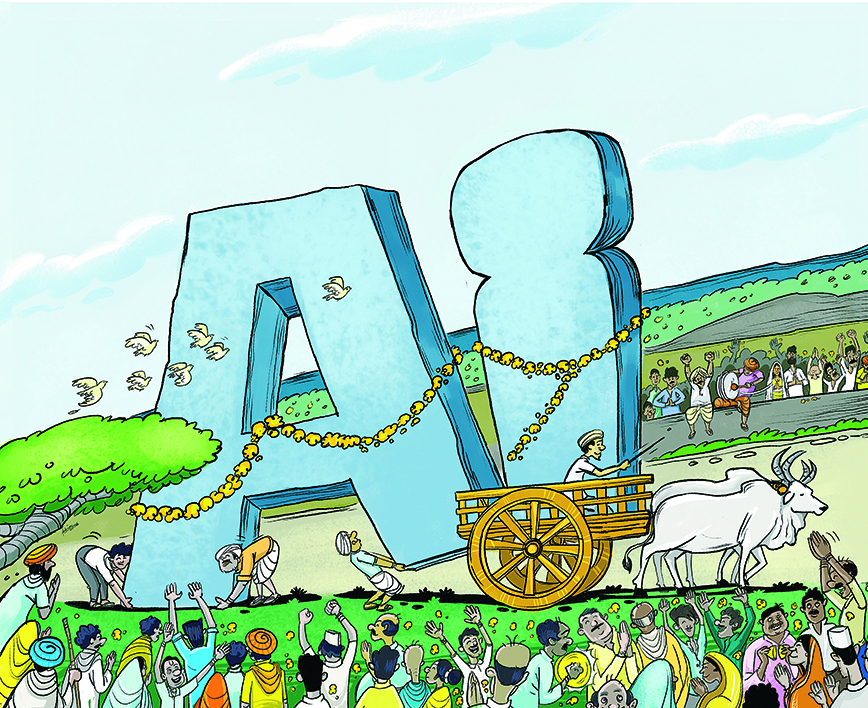


The abbreviation for artificial intelligence, AI, is now as commonly used as TV. And like television, artificial intelligence has permeated everyday life. It became even more ubiquitous when the AI Impact Summit was held in Delhi in February. A media barrage amplified AI’s visibility for the government-led event which heads of state and globally renowned industry figures attended. AI models on display drew such large crowds to the exhibition section that the event had to be extended by a day.
The New Delhi Declaration, finalized at the summit and endorsed by over 80 countries, was well-crafted and said all the right things, in keeping with its theme of ‘Sarvajan Hitaya, Sarvajan Sukhaya’ (welfare and happiness for all). It positions AI as a global public good that must be democratized, not monopolized, and emphasizes collaborative, trusted, inclusive AI development. One would assume that these motherhood statements would be universally acceptable; yet, the Declaration is voluntary and non-binding, with no enforcement mechanism. Further, in keeping with its general disdain for any multilateral agreements, the US explicitly stated it “rejects global governance of AI”.