
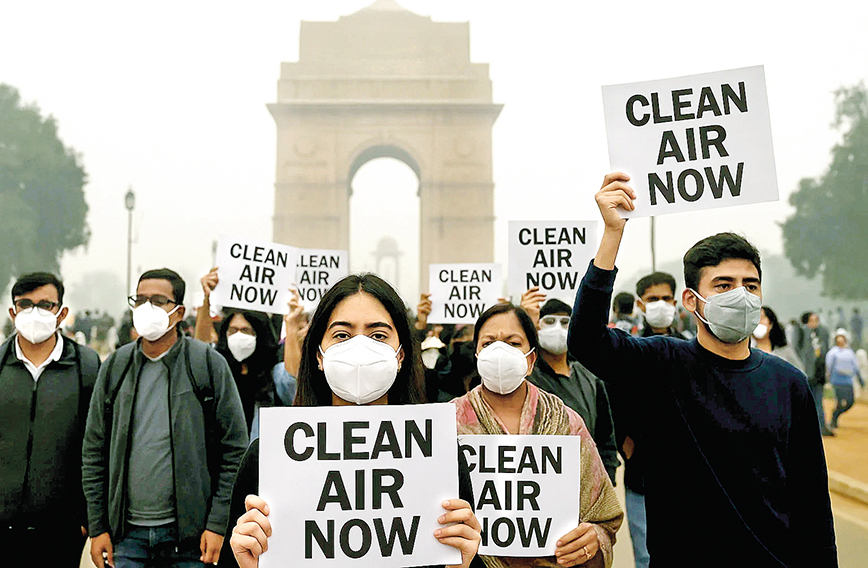


For more than a decade, Delhi has experimented with various pollution control measures — the ‘odd-even scheme’, smog towers, water cannon, tree plantation, the Graded Response Action Plan or GRAP, (which restricts industry, construction, and vehicular activity during winter), and now cloud seeding. Despite these efforts, the city continues to suffer. The root cause is simple: these reactive measures do not address the core pollution problem.
Delhi, which constitutes only 2.7 percent of the National Capital Region (NCR), sits at the heart of one of the most urbanized, industrialized, and agricultural regions in the world. Consequently, its air is heavily influenced by pollution from neighbouring districts. Studies reveal that only 30 to 50 percent of Delhi’s air pollution originates within the city, while the remaining 50 to 70 percent comes from outside. This means that a regional approach is essential to reduce air pollution in the city.